
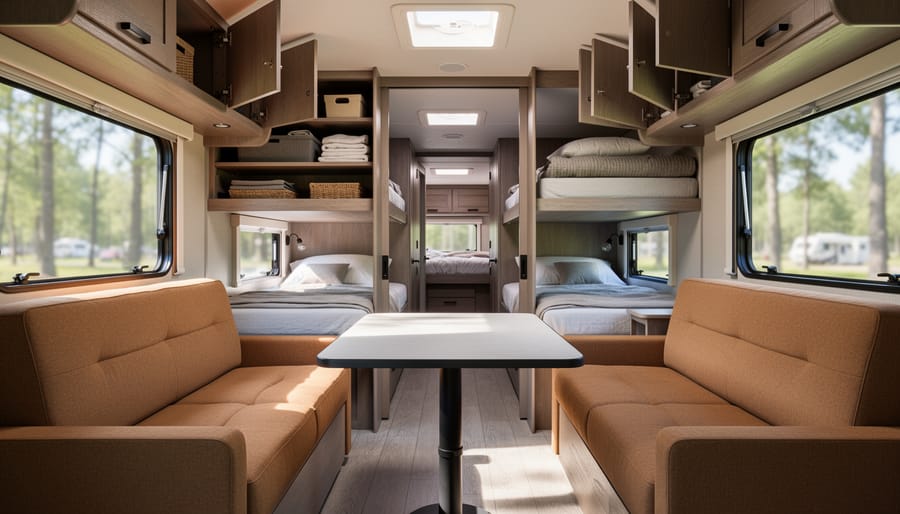
Yes, you can find an RV that comfortably sleeps six, and the best choices come in eight main types: bunkhouse travel trailers, double-bunk fifth wheels, toy haulers, Class A motorhomes with bunks, Class C motorhomes with cab-over bunks, rear-bunk and front-bedroom floorplans, expandable hybrid trailers, and large travel trailers with a loft or front living layout. Each one suits a different family, budget, and tow vehicle.
Here’s the honest part about “sleeps six.” It usually counts every bed, bunk, dinette conversion, and sofa pull-out, whether or not the sleeping spot works for a growing kid or a tired adult. A rig can sleep six on paper and still feel tight on day three of a rainy trip. So we looked past the sticker number and ranked each type on real bed sizes, floor space for moving around, storage, towing needs, and how easy it is to set up after a long drive.
Think of it like packing the family car for a road trip. Everyone fits, but someone’s always wedged between the cooler and the beach bags. The right RV gives each person a spot to call their own.
Whether you’re planning weekend camping trips or a year of full-time travel, this list will help you match your crew to the right rig, step by step, with plain-English explanations along the way.
How We Chose These RVs for a Family of Six
When I started researching RVs for our family, I assumed more beds meant a better fit. I was wrong, and that’s why I ranked this list by how a rig actually feels with six people inside, not just how many sleeping spots it claims.
Here’s what I looked at for every pick:
- Sleeping layout: real, usable beds, not just a count on a brochure.
- Living and dining space: room for six to sit, eat, and play a card game together.
- Storage: places for gear, clothes, and groceries for a whole crew.
- Bathroom access: how easy it is to reach at 2 a.m. without waking everyone.
- Towing or driving ease: how friendly the rig is for beginners.
- Family-friendly features: bunks, outdoor space, and layouts kids genuinely enjoy.
A few terms will come up as you shop, so let’s keep them simple. GVWR (gross vehicle weight rating) is the most the RV can safely weigh when fully loaded. Dry weight is what it weighs empty, straight from the factory, before you add water, food, or gear. Payload, or cargo capacity, is how much stuff and how many people you can add before hitting that safe limit. With six people and their belongings, payload fills up faster than you’d think.
Because every rig type here has its own strengths, I didn’t pick a single winner. Instead, I explained who each style suits best so you can match it to how you travel.
One friendly reminder: models, floorplans, and pricing change with each model year. Before you fall in love with a layout, confirm the current specs with the dealer and the manufacturer. A quick call now saves headaches later.
What Does “Sleeps Six” Really Mean? Beds, Weight, and Real-Life Comfort
Here’s something I wish someone had told me before our first big trip: “sleeps six” is a marketing phrase, not a promise. On paper, our first rental counted a fold-down dinette, a couch, and two bunks. In real life, the dinette bed was barely wide enough for one kid, and the bunks were sized for small children, not my lanky eleven-year-old.
That’s the catch. Manufacturers add up every surface you could technically lie on. Convertible dinettes and sofas count as beds, but you have to rebuild them every night and lose your table and seating each morning. Bunks might fit a seven-year-old beautifully and a teenager not at all. And adults need room that a compact berth just doesn’t give.
The second surprise is weight. Every RV has a limit on how much it can safely carry, and six people plus bags, food, water, and bikes use it up faster than you’d think. A tow vehicle also has a limit on how much it can pull. A rig with plenty of beds can still be the wrong choice if your truck or SUV can’t handle it.
So when you’re comparing layouts, ask two questions: who really fits in each bed, and can we safely carry and tow everything? Answer both honestly, and you’ll avoid the cramped, overloaded start we had.
1. Bunkhouse Travel Trailers: The Classic Choice for Six
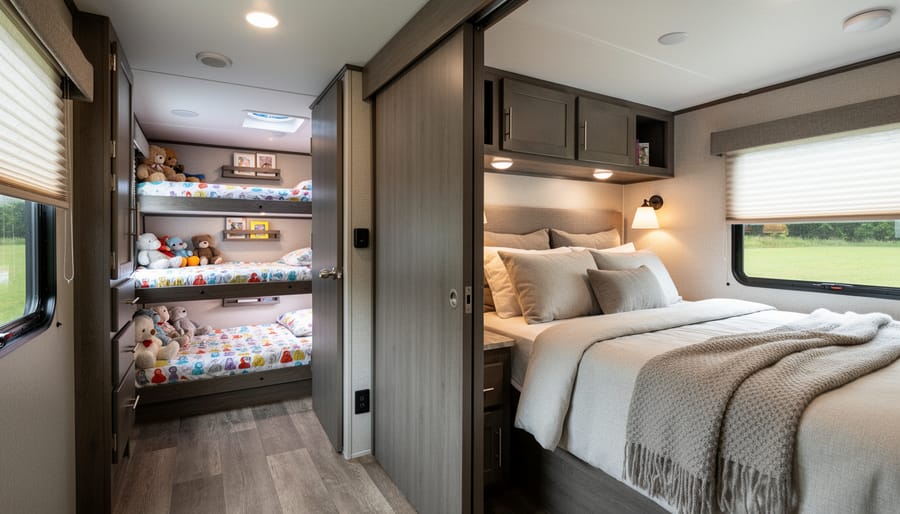
A bunkhouse is a travel trailer built around a dedicated bunk room, usually a small space at the back or middle with two or three bunks, a door or curtain, and room for kids to call their own. Pair that with a queen bed for the adults and a dinette that folds into a bed, and you’ve got the layout that sleeps six without anyone sharing a pillow. It’s popular for good reason.
Picture a family of six walking into their first bunkhouse at a campground. Before the parents even finished unpacking, the kids had raced down the hall to argue over who got the top bunk. Within ten minutes, backpacks were tucked in cubbies, stuffed animals were claimed, and the “bunk room rules” were being negotiated. That feeling of having a space that’s truly theirs is what makes this layout such a hit with kids.
Bunkhouses suit beginners, weekend campers, and seasonal travelers especially well, since they’re simple to understand and easy to live in. If you’re starting your search, a family-friendly travel trailer with a bunk room is often the smartest place to begin.
As for towing, many bunkhouses need a half-ton truck or a full-size SUV with a solid tow rating, though lighter models exist. Always check the trailer’s loaded weight against your vehicle’s capacity, and confirm the specs with the manufacturer before you buy.
2. Double-Bunk Fifth Wheels: Space and Stability for Full-Time Families
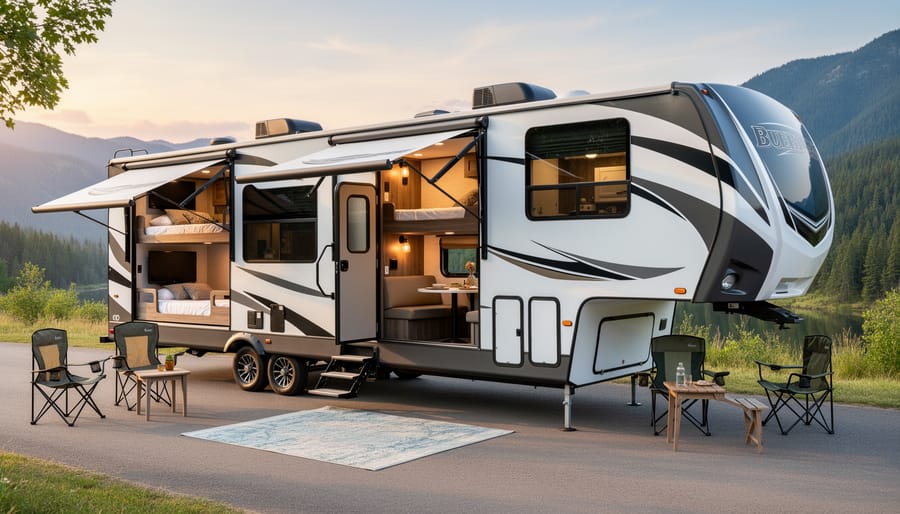
If you’re planning to live on the road, a double-bunk fifth wheel is hard to beat. A fifth wheel is a trailer that hitches into the bed of a pickup truck instead of onto the bumper. The connection is a big, round plate in the truck bed, a bit like a horseshoe, that the trailer’s front pin locks into. That setup sits the weight over the truck’s rear axle, which makes towing feel steadier and more stable, even on windy highways.
The layout is where families of six really benefit. Fifth wheels have taller ceilings, so adults aren’t ducking all day. Many floorplans put a bunk room at the back or the opposite end from the main bedroom, which gives kids their own space and parents a little peace. You also get far more storage, with big pass-through basement compartments for chairs, bikes, and all the gear that comes with six people.
All that room is a big reason these rigs suit families doing full-time living. Bigger kitchens, real closets, and residential-style furniture make daily life feel more like home.
The trade-off is the truck. Most fifth wheels need a heavy-duty pickup, usually a three-quarter-ton or one-ton, with enough payload to handle the hitch weight. Always check the trailer’s GVWR (its maximum loaded weight) against your truck’s tow rating before you buy.
At the campground, take it slow. Back in gently with a spotter, level the rig side to side, then lower the landing legs before unhitching. Ask the campground about site length first, since these rigs run long.
3. Toy Haulers with Family Sleeping Layouts: Flexible Space for Gear and Kids
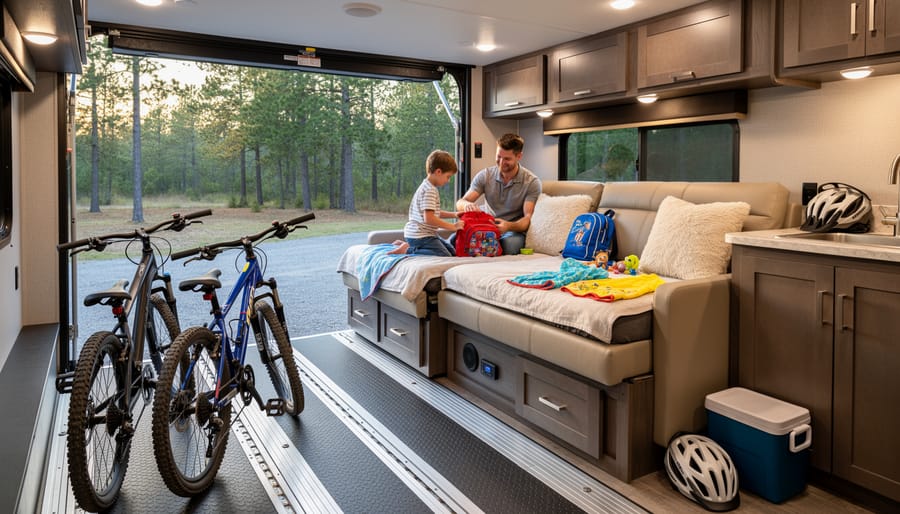
A toy hauler is an RV with a rear garage area, originally designed to haul motorcycles or ATVs. For families of six, that garage is a clever bonus: with the ramp door closed and the space cleared out, it often converts into extra sleeping room using fold-down bunks, flip-up sofas, or even a convertible bed.
Picture this: the kids spend the day biking trails and paddling a lake, then roll their gear into the garage at night, flip down the bunks, and suddenly there’s a cozy hangout space. Many families love that the ramp doubles as a patio deck when it’s lowered. Some even set up a little outdoor “porch” with chairs and a rug.
The big win is flexibility. Bikes, e-bikes, kayaks, and camping gear all live in the garage instead of crowding the main living area or hanging off your tow vehicle. That keeps the rest of the rig tidier, which matters when six people share one space.
There are trade-offs, so go in with eyes open. The garage takes up room that a traditional living area or extra storage would use, so the kitchen, dinette, and lounge can feel smaller. Garage floors can also be noisy and a bit cooler at night, and sleeping next to stored gear isn’t for everyone. Check how quickly the bunks convert, too, because you’ll be doing it every day.
If your family travels with lots of outdoor gear, a toy hauler can be a practical, adventure-ready choice. Always confirm the sleeping count and weight limits with the manufacturer.
4. Class A Motorhomes with Bunks: Comfort for Long Stretches on the Road
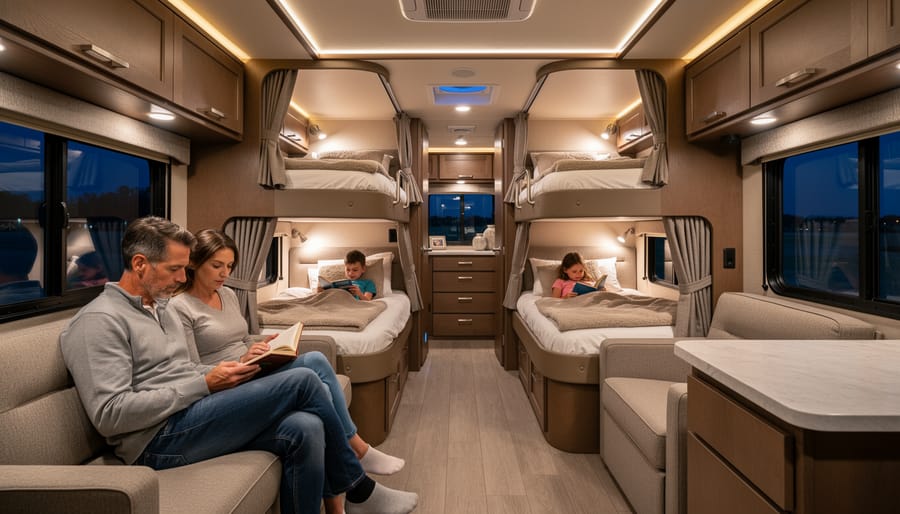
Class A motorhomes are the big, bus-style RVs you picture rolling down the interstate. Some floorplans include a bunk room with two or even three beds for kids, plus a main bedroom for parents and a sofa or dinette that converts for the sixth sleeper. If you want one rig that carries the whole crew, this is it.
The biggest perk is that everyone rides together. Kids get a real seat and a table, and nobody is stuck in a separate vehicle. On one long drive through the Southwest, our crew spread out with books and snacks, and I could hand back sandwiches without pulling over once. The kids called it “the land cruise,” and the name stuck.
There are tradeoffs worth knowing about. Class A rigs cost more up front, and many run on gas or diesel at only 6 to 10 miles per gallon. Insurance and maintenance usually run higher too, so build those into your budget early.
You also can’t just pop into town in a rig this size. Most families tow a small car behind it, which is often called a “toad,” or mount a bike rack for quick trips to the grocery store or a trailhead. Either way, plan for that second way to get around before you buy.
Also keep an eye on weight. Bunk beds and a full crew add up fast, so check the cargo carrying capacity on the floorplan you like. If you’re new to driving something this long, a test drive or a short rental will tell you a lot about how it feels on real roads.
5. Class C Motorhomes with Cab-Over Bunks: A Friendly Starting Point for Families
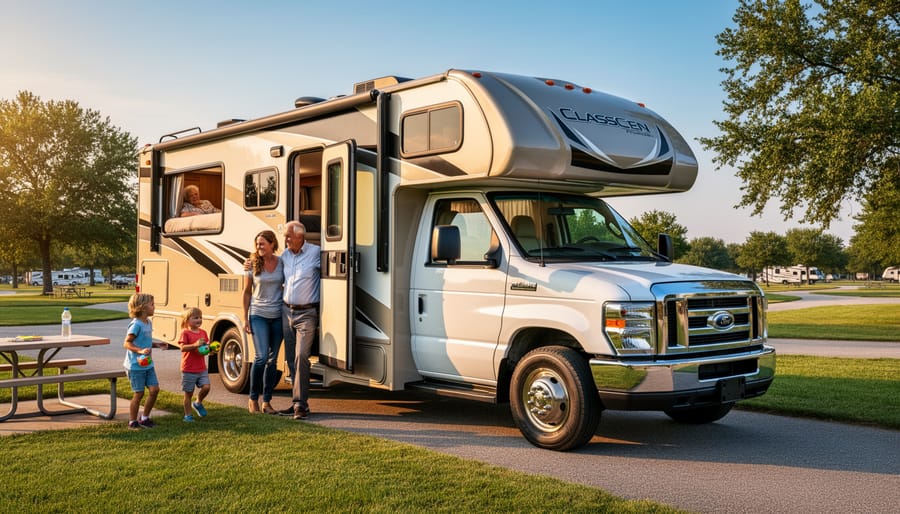
If you’ve ever seen a motorhome with a little “bed bump” jutting out over the driver’s seat, you’ve spotted a Class C. These rigs are built on a truck-style chassis, so the front looks and drives a lot like a big van or pickup. That familiar feel is exactly why so many first-time motorhome families start here.
The sleeping math works like a puzzle. The cab-over area holds a bed that kids love to claim as their own little loft. A rear bedroom (often with a queen bed or bunks) takes care of the parents or a second pair of kids. Then the dinette converts into one more bed, and a sofa sometimes adds extra space. Put those together and you can reach six sleepers, though it’s worth lying down in each spot before you buy.
Driving is where Class Cs really shine for beginners. You sit in a cab with a normal dashboard and steering, and the rig is shorter and easier to park than a bus-style Class A. Everyone rides together, too, which makes for great snack-and-singalong road days. When it’s time to plan an RV road trip you can use a few handy road trip apps to find campsites that fit your length.
There’s a trade-off to know about. Storage is tighter, and the cargo carrying capacity (how much weight you can add in people and gear) is limited. Six people plus luggage can add up fast, so check the weight ratings with the dealer before you commit.
6. Rear-Bunk and Front-Bedroom Floorplans: Privacy for Parents and Kids
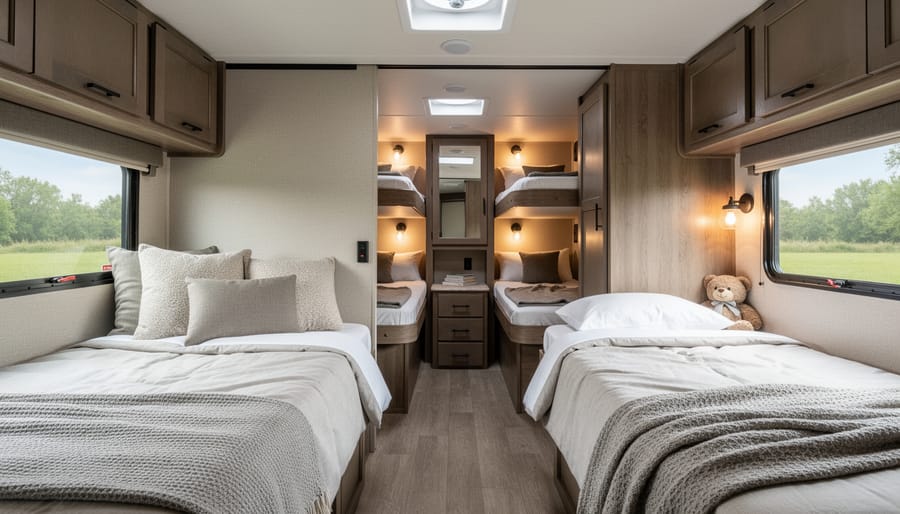
Picture this: your fourteen-year-old stays up reading with a flashlight while your six-year-old needs lights out at eight. In a one-room layout, that’s a nightly negotiation. In a rear-bunk, front-bedroom floorplan, it’s a non-issue.
These layouts put the primary bedroom at one end of the RV and the kids’ bunks at the other. The kitchen, dinette, and living area sit in the middle, acting as a natural buffer. Parents can close their door and have a bit of quiet, while kids can chat, giggle, or binge a show without keeping anyone awake. It’s a lifesaver for families with teens who want their own space, or for light sleepers who wake at every creak.
When you tour one, check a few things:
– Bathroom placement: A bathroom reachable without walking through the parents’ room (or the kids’ room) means fewer midnight disruptions.
– Door access: Look for real doors or sturdy privacy curtains on the bunk area and bedroom, not just flimsy dividers.
– Walkway width: Picture six people trying to get to the fridge at once. A tight hallway gets old fast.
– Bunk size: Make sure older kids can actually stretch out, since some bunks are short.
Sleep-friendly layouts make long trips feel calmer, and calmer trips mean happier families.
7. Expandable Hybrid Trailers: Lighter Weight with Pop-Out Sleeping Ends
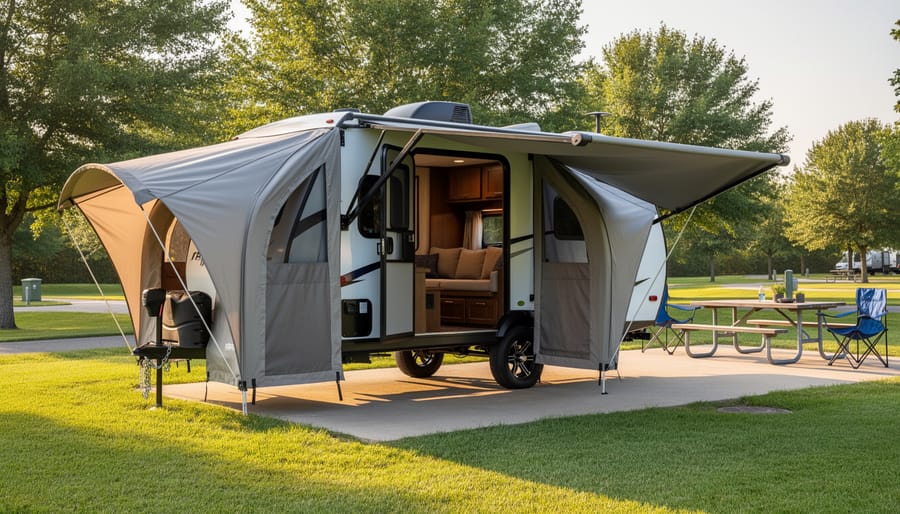
Hybrid trailers are a clever middle ground. They have a hard-sided body, like a regular travel trailer, but the bunk ends slide out and unfold into tent-style sleeping areas on each side. Fold them in and you get a compact, lighter rig. Fold them out and a trailer that tows like a small camper suddenly sleeps up to six.
That lighter weight is the big draw. Many hybrids can be pulled by a mid-size SUV or half-ton truck, so you may not need to shop for a heavier tow vehicle. Always check the trailer’s GVWR against your vehicle’s tow rating, though, and leave yourself some breathing room.
Now the honest part. Setup takes longer, since you’ll crank out the bunks, secure the canvas, and tuck everything away again before you leave. The fabric ends also offer less insulation than hard walls, so hot afternoons, chilly nights, and heavy rain can feel more noticeable. Packing up a wet bunk end means drying it out before long-term storage.
Still, kids often love sleeping in those canvas bunks, and the trade-offs are easy to live with for the right family. Hybrids suit weekend and seasonal campers, beginners with a mid-size tow vehicle, and families who spend most of their time outside anyway. On those trips, simple cooking keeps things relaxed, so having a few easy camping meals in your back pocket helps, and a handful of campfire recipes for families turns evenings into a highlight.
8. Large Travel Trailers with Loft or Front Living Layouts: Extra Room to Spread Out
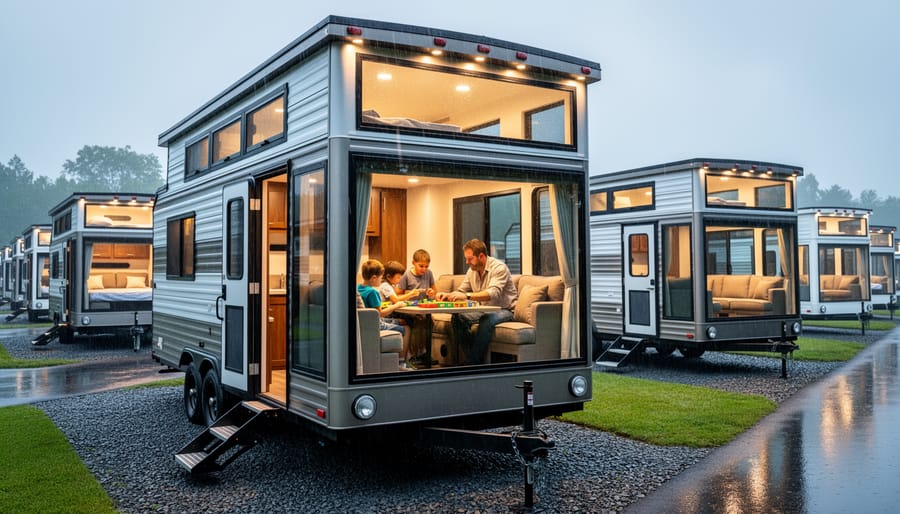
Rainy days are where large travel trailers earn their keep. Picture six people stuck inside for an afternoon: in a standard floorplan, someone ends up hiding in the bathroom for privacy. In an oversized trailer with a loft, a bunk room, or a second living area up front, the kids can claim one space for movies and games while the adults get a quiet corner of their own.
Some of these layouts include a loft over the main living area, which gives teens a spot to sprawl out. Others put a full lounge at the front, with its own sofa and TV, separate from the kitchen and dinette. Pair that with a dedicated bunk room and a private bedroom, and sleeping six comfortably stops feeling like a puzzle.
Here’s the catch: size can make campsites tricky. Many of these trailers run 35 to 40 feet or more, and plenty of campgrounds, especially older state and national park sites, have length limits that are shorter than that. Tight turns, low branches, and sloped pads can make parking a real challenge too. Always check the maximum RV length, slide-out clearance, and any park restrictions before you book. Nothing ruins a trip like arriving at a site your trailer simply can’t fit into.
A quick tip: when searching for campgrounds, look for ones that advertise themselves as big-rig friendly, with pull-through sites, wide roads, and long pads. Calling the campground ahead of time to confirm your exact rig length is always worth the few minutes.
Frequently Asked Questions About RVs for a Family of Six
Families of six ask us the same handful of questions again and again, so here are the practical answers.
Can a family of six live in an RV full time?
Yes, plenty of families do it. Double-bunk fifth wheels and large travel trailers with a loft or second living area tend to work best, because the extra storage and separate zones make daily life feel less crowded.
What size tow vehicle do I need?
It depends on the trailer’s loaded weight, not just its length. Check the GVWR and your truck’s towing capacity and payload, and leave a safety cushion. Hybrid trailers are usually the lightest way to sleep six, while fifth wheels need a heavy-duty truck.
Are bunkhouses safe for little kids?
They can be, with a few precautions. Look for sturdy ladders, guard rails, and a weight rating that suits your kids, and consider keeping toddlers on lower bunks or in a bed near you.
Should we rent before buying?
We’d say absolutely. A weekend in a rented Class C or bunkhouse trailer shows you how six people actually move through the space, and it can save you from an expensive mismatch.
Keeping the peace in tight spaces comes down to a few small habits. Give everyone a spot that’s truly theirs, even if it’s just a bunk with a reading light and a curtain. Set quiet hours, rotate who gets the dinette for games, and get outside every day so nobody builds up cabin fever. On rainy days, a rig with a loft or second living area, or a rear-bunk and front-bedroom floorplan, gives people room to retreat without leaving the camper.
The best RV for six isn’t the biggest one on the lot. It’s the one that fits how your family actually travels, what you’re comfortable towing or driving, and what your budget can handle without stress. Before you sign anything, rent a rig for a long weekend or walk through a few floorplans with everyone in tow. Nothing builds confidence like seeing where the kids will sleep and how the morning routine really flows.
Whatever you choose, you’ll learn as you go, and every trip makes the next one easier. So pick a few floorplans to tour, pull out the map, and start dreaming up your next family adventure.