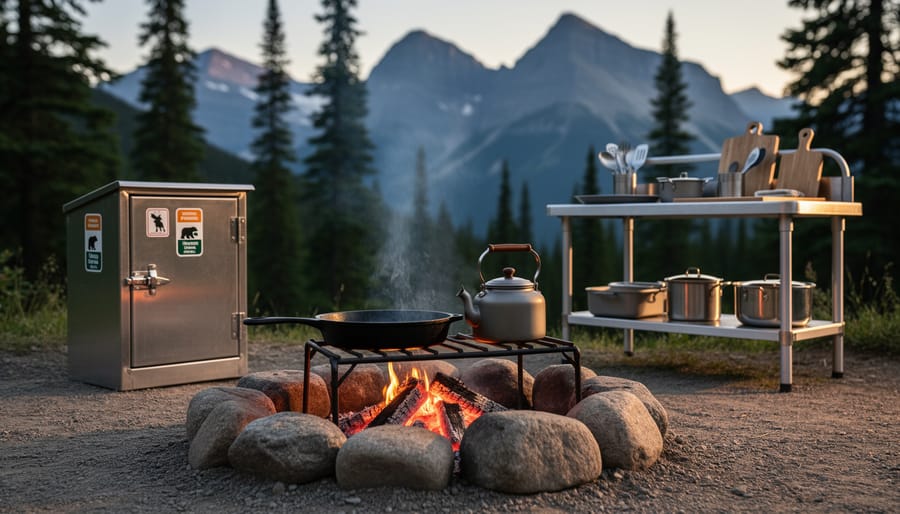
Camping in Jasper National Park means cooking under some of the strictest wildlife safety rules in North America, but with the right preparation, your family can enjoy delicious outdoor meals while staying completely compliant. The key is understanding bear-proof food storage requirements, mastering campfire alternatives for fire-ban periods, and choosing recipes that work within the park’s mandatory protocols. Most campgrounds in Jasper provide food lockers and designated cooking areas, so success comes down to bringing appropriate gear and following a straightforward workflow that keeps wildlife safe and your family well-fed.
I’ll never forget our first morning in Jasper back in 2018, when a warden politely but firmly reminded us that even our coffee grounds needed to go straight into the bear-proof locker. That wake-up call taught us everything we now know about cooking in grizzly country. Since then, we’ve camped throughout the Canadian Rockies dozens of times, and Jasper remains one of our favorite spots precisely because the regulations work. You see fewer problem bears, which means safer campgrounds for families.
The challenge isn’t just following rules written on a sign. It’s adapting your usual camping routine to an environment where food attracts animals that can be genuinely dangerous. Whether you’re planning RV road trip planning through the Rockies or just getting started with RV living tips Jasper’s system becomes second nature after your first trip. This guide walks you through exactly what equipment to pack, which cooking methods comply with current fire restrictions, and how to prepare simple, satisfying meals that work within the park’s framework.
What You’ll Need for Camp Cooking in Jasper
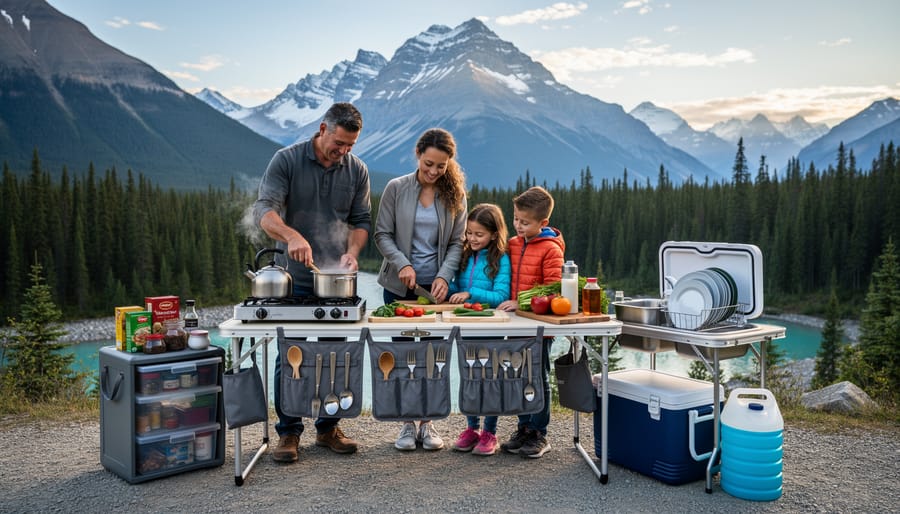
Cooking in Jasper National Park requires thoughtful preparation, especially when you’re balancing spectacular mountain scenery with serious wildlife safety protocols. Whether you’re cooking from a fully equipped RV kitchen or roughing it with tent camping gear, having the right equipment makes the difference between frustrating meal prep and genuinely enjoyable outdoor cooking that becomes a highlight of your family’s adventure.
Your setup depends on your camping style. RV travelers have the luxury of built-in stoves, ovens, and refrigeration, but you’ll still want portable gear for cooking outside when the weather cooperates and you want that authentic campfire experience. Tent campers need to bring everything, so prioritize multi-purpose items that pack efficiently. Either way, Jasper’s elevation (around 1,060 meters) and unpredictable mountain weather mean you need reliable backup options.
Here’s your essential cooking kit for Jasper:
- Heat sources: Propane camp stove with extra fuel canisters, portable grill grate for fire-pit cooking, and waterproof matches or lighter
- Cookware: Cast-iron skillet, Dutch oven, medium pot with lid, aluminum foil (heavy-duty), and coffee percolator or kettle
- Utensils and prep tools: Sharp knife, cutting board, wooden spoons, spatula, tongs, can opener, and mess kits for each family member
- Food storage: Hard-sided cooler, Parks Canada-approved bear-proof container or vehicle storage, resealable bags, and plastic containers with tight lids
- Safety and cleanup: Fire extinguisher or water bucket, biodegradable soap, washbasins, dish towels, trash bags, and work gloves for handling hot cookware
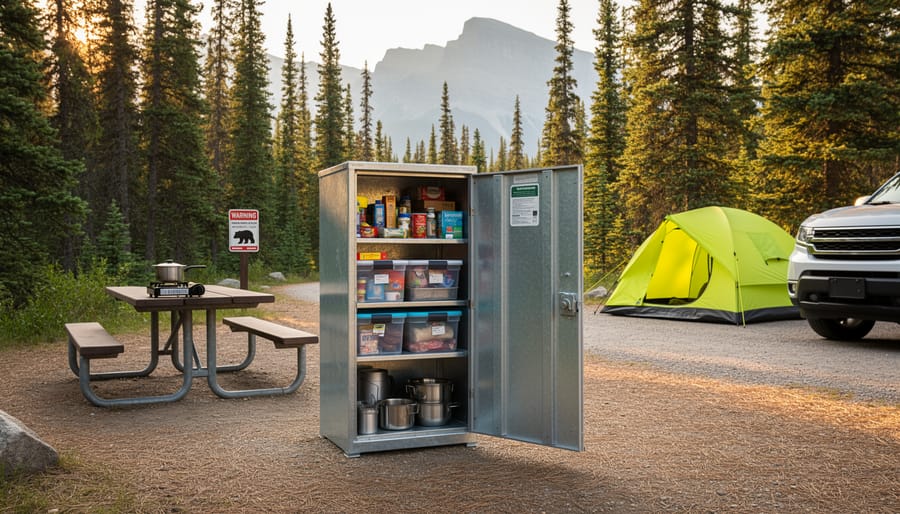
The bear-proof storage piece is non-negotiable in Jasper. You cannot simply leave food in a soft cooler or tent. Parks Canada requires all scented items (food, toiletries, even lip balm) to be stored in your hard-sided RV, a vehicle trunk, or designated bear lockers at your campsite. We learned this the hard way on our first Jasper trip when a ranger firmly explained that “smelling like bacon” is an invitation we don’t want to extend to the local grizzly population.
Bring more propane than you think you’ll need. Mountain weather can force you indoors, and you’ll burn through fuel faster at elevation. Pack ingredients that travel well and don’t require constant refrigeration as backup options. Dried pasta, rice, canned beans, and shelf-stable proteins become your friends when the cooler ice melts faster than expected in Jasper’s summer sun.
Safety First: Jasper’s Wildlife and Fire Regulations
Before you light that camp stove or start a fire in Jasper, you need to understand that this isn’t just backcountry etiquette, it’s the law, and breaking these rules puts both your family and wildlife at serious risk. I learned this the hard way during our first Jasper trip when a park warden gave us a stern talking-to about our cooler placement. That wake-up call taught me that Parks Canada’s regulations exist because bears have incredible memories and will return to campsites where they’ve found food rewards.
Bear-safe food storage isn’t optional in Jasper. Every campsite provides either metal food lockers or designated storage areas where all food, toiletries, and anything with a scent must go when you’re not actively using it. This includes your cooler, even if it’s locked. I keep a separate bag just for cooking supplies that goes into the locker immediately after we finish meals. Grills and camp stoves need to be cleaned thoroughly after each use because residual grease attracts bears just as effectively as fresh food.
Fire regulations change frequently based on weather conditions and wildfire risk. Check the Jasper fire ban rules when you arrive and again each morning during your stay. During fire bans, you can still use propane or naphtha stoves, but all wood fires are prohibited. I’ve had trips where conditions changed mid-week, and we had to switch from campfire cooking to our portable stove setup.
Food waste disposal follows strict protocols under Garbage and food disposal regulations for national parks. Scrape plates into designated garbage bins with secure lids, never onto the ground or into fire pits. Wash dishes at least 70 meters from water sources using biodegradable soap, and scatter strained dishwater widely over bare ground. We carry a small mesh strainer to catch food particles from dishwater, which then go into the bear-proof garbage.
Step-by-Step Guide to Campfire Cooking Success
Setting Up Your Cooking Area
Choose a cooking spot at least 15 feet away from your tent or RV, this distance keeps food smells away from where you sleep and gives you room to work without tripping over guy lines or awnings. Look for a flat, cleared area where you won’t accidentally kick dirt into your pots. Most Jasper campgrounds have designated fire pits or picnic tables; use these established spots rather than creating new ones.
Set up your camp stove on a stable surface like a picnic table or a flat rock, never directly on dry grass or pine needles. If you’re using the fire pit, clear any loose debris from around it first. We learned this the hard way at Whistlers Campground when a gust of wind sent napkins straight into our coals.
Organize your ingredients and tools before you start cooking. Lay out everything you need on one side of your table, spices, oils, utensils, and ingredients, then designate the other side as your plating area. Keep a large bowl or bag handy for trash and food scraps that you’ll dispose of properly later.
Give kids specific jobs that keep them engaged but away from flames. They can wash vegetables at the water station, measure ingredients, set the table, or watch for wildlife from a safe distance. Our daughter loved being the official “ingredient runner,” fetching items as we needed them. This keeps little hands busy and teaches responsibility while you maintain control of the actual cooking.
Building and Managing Your Campfire (If Permitted)
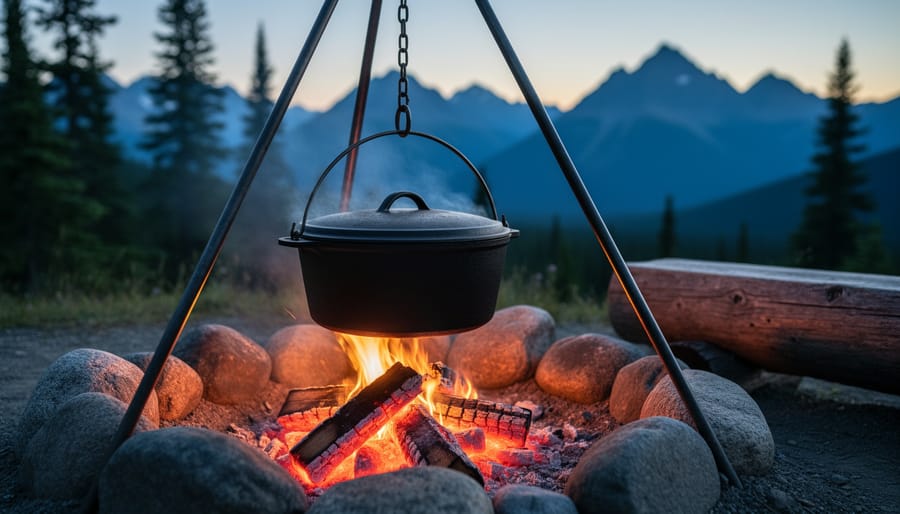
Before striking a single match, confirm that Jasper hasn’t issued a fire ban. Parks Canada posts current restrictions at campground kiosks and online, and with wildfire conditions changing quickly in the Rockies, what was allowed yesterday might be prohibited today. If fires are permitted, here’s how to build one that actually cooks your food instead of just making smoke.
- Gather three types of wood: tinder (dry pine needles, birch bark, small twigs), kindling (pencil-thick sticks), and firewood (wrist-thick split logs). Never cut live trees or branches in Jasper. Use only fallen deadwood from the forest floor or purchase bundles at the campground office.
- Create a teepee structure in your fire pit’s center using kindling, leaving a gap to insert tinder. Place the tinder bundle underneath, then lean progressively larger kindling pieces against the teepee frame. This design channels air upward and catches efficiently.
- Light the tinder from the upwind side using long matches or a lighter, protecting the flame with your hands. Let the fire establish itself before adding larger pieces. Resist the urge to poke or rearrange too early.
- Once flames are steady, add two or three small logs in a crisscross pattern. You’re building a bed of coals, not a bonfire. For cooking, you want a fire that’s burned down to glowing embers with minimal flame, which typically takes 30 to 45 minutes.
Managing heat is where most camp cooks stumble. High flames char the outside of food while leaving the inside raw. Wait until you see that white-ash coating on red-hot coals before you start cooking. Test the temperature by holding your hand six inches above the grate: if you can keep it there for five seconds, that’s medium heat, perfect for most recipes. Two seconds means high heat for searing. Push coals around to create hot and cool zones, giving you temperature control similar to stovetop burners.
Keep a bucket of water and a shovel within arm’s reach throughout cooking. Add small pieces of wood to maintain heat, not big logs that create flare-ups. When you’re finished, drown the fire completely until the ashes are cool enough to touch.
Preparing Five Family-Friendly Jasper Camping Recipes
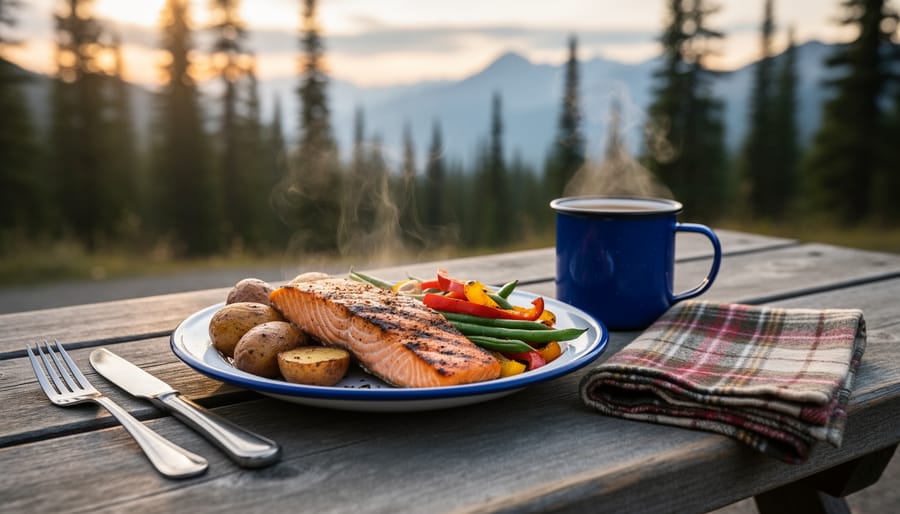
These five recipes have earned their spot in our Jasper camping rotation, each tested on family trips where bears outnumber restaurants and the closest grocery store is back in town.
Campfire Breakfast Scramble gets everyone fueled for hiking. Crack six eggs into a cast iron skillet over medium coals, add pre-diced peppers and onions, crumbled cooked bacon, and shredded cheese. Stir constantly for 5-7 minutes until just set. Kids love adding their own toppings from small containers you prep the night before. Serve with toasted bagels propped on grill grates.
Foil Packet Mountain Trout works whether you caught it yourself or picked it up at the Jasper Supermarket. Place a cleaned trout on heavy-duty foil, stuff the cavity with lemon slices and fresh dill, drizzle with butter, and seal tightly. Cook directly on hot coals for 12-15 minutes, flipping once. The fish is done when it flakes easily with a fork. This method keeps cleanup minimal and preserves delicate flavors.
Dutch Oven Chili feeds a crowd and tastes better at altitude. Brown two pounds of ground beef in your preheated Dutch oven, add diced onions and garlic, then stir in canned tomatoes, kidney beans, chili powder, and cumin. Nestle the covered pot in coals with more coals on the lid, rotating every 15 minutes. Simmer for 45 minutes, checking that it bubbles steadily. Top with sour cream and serve with cornbread for hearty easy camping meals.
Grilled Veggie Skewers balance out the heavier dishes. Thread bell peppers, zucchini, mushrooms, and cherry tomatoes onto soaked wooden skewers, brush with olive oil and Italian seasoning, then grill over direct heat for 10-12 minutes, turning frequently. They char beautifully and kids who normally skip vegetables will grab seconds.
S’mores Variations go beyond the basic graham-chocolate-marshmallow. Try peanut butter cups instead of plain chocolate, add sliced strawberries, or use chocolate chip cookies as the base. Our family favorite uses Ritz crackers with Nutella. These campfire family recipes create traditions that stick with kids long after the trip ends.
Proper Cleanup and Bear-Safe Food Storage
Clean your dishes immediately after eating using biodegradable soap at least 70 meters from water sources. Strain all food particles through a fine mesh and pack them out with your garbage, never bury scraps or pour grease on the ground, as bears can smell it for days.
Store all food, coolers, toiletries, and scented items in your RV’s locked interior or in the Parks Canada-approved bear-proof lockers provided at most Jasper campgrounds. If you’re tent camping without access to a vehicle, use certified bear-resistant containers or hang your food at least 4 meters off the ground and 1.5 meters from tree trunks. Lock everything away before dark, even if you’re just walking to the bathroom.
Dispose of dishwater in designated grey-water disposal stations or your RV’s holding tank, never on the ground where wildlife might investigate. Wipe down your cooking area, picnic table, and fire pit to remove any food residue or spills that could attract animals overnight.
Making Sure Your Meals Turn Out Right (and What to Do Next)
The best way to know your food is safe? Use a digital meat thermometer. Poultry should hit 165°F, ground meat 160°F, and fish 145°F. At Jasper’s elevation (around 3,400 feet), water boils at a lower temperature, which means food takes longer to cook through. Add five to ten minutes to standard cooking times for stews, pasta, and baked goods. If your Dutch oven chili seems thin after the usual hour, give it another 15 minutes and check again.
When things go wrong, stay calm. If your fire won’t stay lit in the wind, build a windbreak with rocks or reposition your stove. Rain threatening? Move under your RV’s awning or use a tarp canopy. Ran out of propane mid-recipe? Keep backup canisters in your storage bay, always. Cold mornings slow everything down, so start your coffee water earlier than you think and keep a lid on pots to trap heat.
Once you’ve nailed these five recipes, challenge yourself. Try baking campfire pizza in a cast-iron skillet or smoking trout you caught in Maligne Lake. Download a couple of national parks apps before your next trip to locate campgrounds with the best cooking facilities and track fire ban updates in real time. Keep a camping journal with notes on what worked, what flopped, and which recipes your kids asked for twice.
Each meal you cook in Jasper builds your confidence for the next adventure, whether that’s Banff, Yoho, or a remote backcountry site deeper in the Rockies.
Your Jasper Camp Cooking Questions Answered
Cooking in Jasper brings up specific questions that most families wonder about before their first trip. We’ve tackled the same concerns ourselves over countless camping adventures in the park, and here’s what you need to know.
Do I need a special permit to cook at my campsite in Jasper?
No separate permit is required for cooking at designated campsites with your camping reservation. Your campground fee covers the use of fire pits and picnic areas for meal preparation.
What are Jasper’s bear-safe food storage requirements?
All food, coolers, and scented items must be stored in your hard-sided RV, vehicle trunk, or provided bear-proof lockers when not actively cooking or eating. Leaving food unattended on picnic tables, even for a few minutes, violates park regulations and puts wildlife at risk.
How does Jasper’s elevation affect cooking times?
At Jasper’s 1,060-meter elevation, water boils at a slightly lower temperature, which means pasta, rice, and beans take about 10-15% longer to cook. You’ll notice the biggest difference with baking and boiling methods rather than grilling or pan-frying.
Which Jasper campgrounds have the best cooking facilities?
Whistlers and Wapiti campgrounds offer the most comprehensive setups with sheltered cooking areas, electrical hookups for RVs, and convenient access to potable water. Wabasso provides a more rustic experience but still includes fire pits and basic amenities at each site.
Can I cook during fire bans in Jasper?
Yes, you can still use propane or gas camp stoves during fire bans. Only wood fires and charcoal are prohibited when bans are in effect, so your camping meals can continue without major disruption.
What cooking equipment works best for tent camping versus RV camping in Jasper?
Tent campers should prioritize compact, multi-use gear like a two-burner propane stove, nesting cookware, and a good cooler. RV families can take advantage of their onboard kitchen but should still have a backup camp stove for cooking outside and enjoying the mountain atmosphere.
Weather shifts quickly in the Rockies, so we always pack rain covers for our cooking area and have backup meal plans that don’t require precise temperature control. On our windiest days at Whistlers, we’ve abandoned elaborate campfire cooking for simple one-pot stove meals, and honestly, they tasted just as good with the mountain views as a backdrop. The flexibility to adapt your cooking approach based on conditions makes the whole experience more enjoyable and less stressful for everyone in the family.
Cooking in Jasper National Park isn’t just about feeding your family, it’s about creating memories that stick with you long after you’ve packed up the RV and headed home. Every campfire meal becomes part of your adventure story, whether it’s your kids mastering the perfect s’more technique or gathering around a Dutch oven of bubbling chili while elk graze in the meadow beyond your campsite.
We’ve found that families who embrace outdoor cooking discover a whole new level of connection with nature and with each other. There’s something magical about preparing food together in the fresh mountain air, sharing the work, and celebrating the results under a canopy of stars. The recipes and techniques you’ve learned here work beautifully in Jasper, but they’ll serve you just as well throughout the Canadian Rockies, from Banff to Yoho and beyond.
Once you’ve gained confidence cooking at your Jasper campsite, you’ll find yourself eyeing more remote locations that previously seemed intimidating. Suddenly, those backcountry-adjacent campgrounds and less-serviced sites become viable options because you know you can create satisfying, safe meals anywhere you park.
So fire up that camp stove or (when permitted) build that campfire on your next Jasper trip. Try at least one new recipe from this guide. Your family will thank you, and you might just discover that some of your best meals happen miles from any restaurant, surrounded by mountain peaks and endless wilderness.