
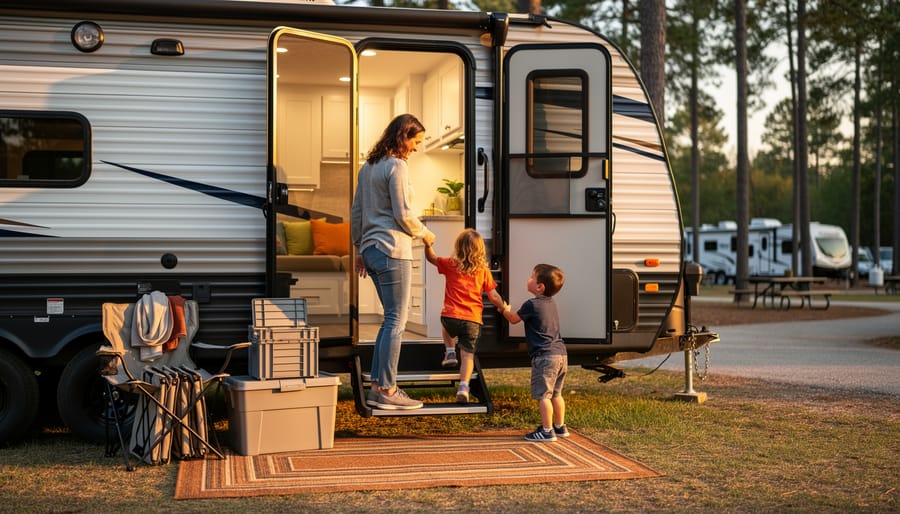
A family friendly travel trailer combines smart sleeping arrangements, durable materials, and purposeful storage to keep parents sane and kids happy on the road. The best options range from 25 to 35 feet, feature bunkhouses or convertible dinettes, include outdoor entertainment access, and offer child-safe features like rounded corners and secure entry steps. Choosing the right one means balancing your family’s size, your tow vehicle’s capacity, and the amenities that will actually matter when you’re three days into a cross-country trip with restless kids.
We’ve spent the last four years traveling full-time with our two children, and I can tell you that not all trailers marketed as “family friendly” live up to the label. Some bunkhouses are so cramped that bedtime becomes a wrestling match. Others promise ample storage but leave you playing Tetris with sports equipment, board games, and everyone’s shoes. The difference between a trailer that works for families and one that just looks good in the showroom comes down to how the space functions when everyone’s inside on a rainy afternoon or when you’re trying to pack up camp with a toddler melting down.
The good news? Manufacturers have gotten much better at understanding what families actually need. Today’s family trailers often include dedicated kids’ spaces, clever storage solutions, and layouts that give parents a sliver of privacy without sacrificing functionality. Whether you’re planning weekend getaways or considering a longer adventure, knowing which features truly enhance family life, and which are just marketing fluff, will save you from buyer’s remorse and help you find a trailer that grows with your family’s adventures.
What Makes a Travel Trailer Truly Family-Friendly
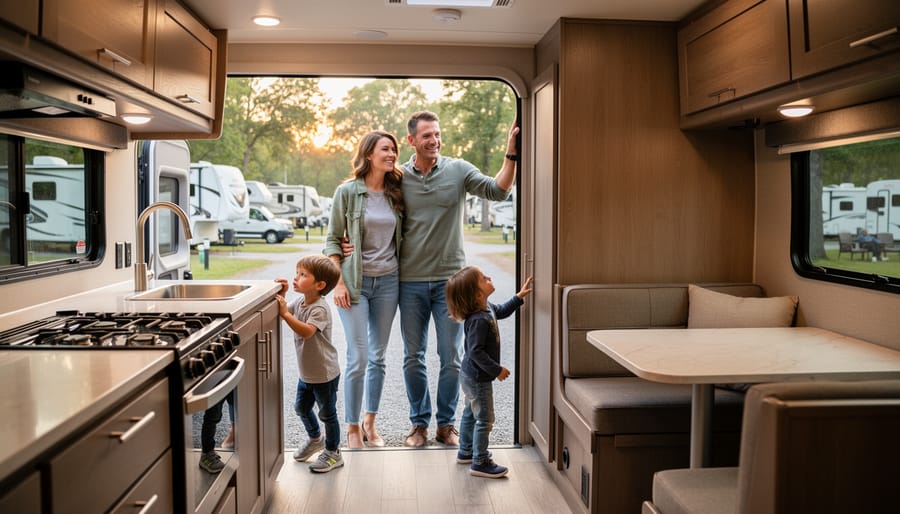
A family-friendly travel trailer isn’t just about having enough beds. It’s about creating a space where kids can be kids, parents can maintain some sanity, and everyone has room to breathe, even when you’re parked in a campground during a three-day rainstorm.
The defining characteristic of a truly family-oriented trailer is flexibility. Standard RV layouts prioritize couples, with a focus on the master bedroom and living area. Family trailers flip this script. You need dedicated sleeping spaces that give kids (and parents) privacy, even if it’s just a curtain separating bunks from the main living area. A trailer with a proper bunk room or convertible dinette that doesn’t require dismantling the kitchen every night makes a world of difference when you’re exhausted after a day of hiking.
Safety features matter more when small humans are involved. Look for rounded corners instead of sharp edges, secure window latches that little fingers can’t easily open, and sturdy railings on bunks. The best family trailers have reinforced flooring that can handle the constant pounding of running feet and the inevitable spills. We learned this the hard way when our daughter knocked over an entire pitcher of juice, and it seeped into cheap subflooring that started growing mold within weeks.
Storage becomes critical with kids. You’re not just packing clothes, you’re hauling toys, sports equipment, bikes, and enough snacks to feed a small army. Family-friendly designs include exterior storage compartments, overhead cabinets placed high enough that they won’t become head-knockers, and creative spaces like under-bed bins or hidden compartments in bench seating.
When evaluating trailers, prioritize these features:
- Multiple sleeping areas that don’t require daily setup and teardown
- Bathroom with a separate shower stall (not a wet bath) and kid-height sinks
- Durable, washable flooring and upholstery that can survive sticky hands
- Climate control that reaches all sleeping areas, not just the main cabin
- Adequate fresh water and tank capacity for frequent hand-washing and showers
- Windows with screens that actually keep bugs out while providing ventilation
Livability also means thinking about where everyone will actually spend time. A cramped dinette that seats four might look fine in the showroom, but if you’ve got three kids trying to do homework, play games, and eat meals in that same spot, you’ll feel the squeeze fast. The best family trailers create distinct zones, a place to cook without tripping over someone watching TV, a table large enough for crafts or schoolwork, and outdoor space integration through large awnings or outdoor kitchens that extend your living area.
The Right Size for Your Family’s Adventure
Small Families and Compact Trailers (Under 25 feet)
Compact trailers under 25 feet pack serious appeal for families with one or two younger kids. We’ve met countless families thriving in these nimble rigs, and the advantages are real: easier towing with mid-size SUVs, access to virtually any campground (including those tight state park loops that shut out bigger trailers), and lower fuel costs that let you explore further.
The trade-off? Creative space management becomes your daily reality. Look for models with convertible dinettes that transform into beds, bunk configurations where kids can actually sit up, and exterior storage for bikes and gear. We’ve watched families nail this by keeping toy rotation minimal and embracing outdoor living as an extension of their square footage.
These lighter trailers also mean less stress navigating mountain passes or backing into spots at farmer’s markets. One family we camped beside in Colorado swore their 22-footer gave them confidence to try boondocking sites they’d have skipped with something larger. For families just starting out or those prioritizing mobility over elbow room, compact trailers deliver freedom without the overwhelm.
Mid-Size Options for Growing Families (25-30 feet)
The 25-30 foot range hits that sweet spot where you get genuine living space without needing a heavy-duty truck or eliminating half the campgrounds in America. We’ve found this size works beautifully for families with 2-4 kids, especially once they’re past toddler stage.
These trailers typically offer a private bedroom, a bunkhouse or convertible dinette, and enough kitchen and bathroom space that you’re not constantly bumping into each other. You’ll find real amenities here: actual closets, a usable pantry, maybe even a slide-out that transforms your living area. Most half-ton trucks can handle trailers in this range, though you’ll want to verify your specific towing capacity.
The campground access advantage matters more than you’d think. State parks, national forests, and many private campgrounds cap length at 30 feet or less. Stay within that limit and your options multiply exponentially. We’ve watched families in 32-foot rigs drive past amazing spots we could easily claim.
Storage becomes genuinely functional at this size. You can pack bikes, camping gear, and enough clothing that you’re not doing laundry every other day. That’s freedom.
Larger Trailers for Big Families (30+ feet)
When you’ve got three or more kids or regularly travel with extended family, those extra feet make a real difference in daily comfort. We’ve watched families transform their travel experience by moving into the 30-35 foot range, where everyone finally has breathing room and homework doesn’t happen on someone’s bed.
The trade-off comes with your towing setup. You’ll need a three-quarter ton truck minimum, and honestly, many families find a one-ton more confidence-inspiring on mountain passes. Your fuel budget increases noticeably, and you’ll burn through brake pads faster on long descents.
Campground accessibility becomes your biggest planning consideration. Many state and national parks cap sites at 30 feet, and good luck squeezing a 35-footer into some of those gorgeous mountain campgrounds. You’ll find yourself gravitating toward private RV parks with pull-through sites, which changes the flavor of your adventures somewhat.
That said, having separate sleeping areas, a real dinette that seats six, and bathroom space where kids aren’t climbing over each other makes daily life infinitely smoother. For big families committed to extended travel, the space often justifies the limitations.
Must-Have Features for Families on the Road
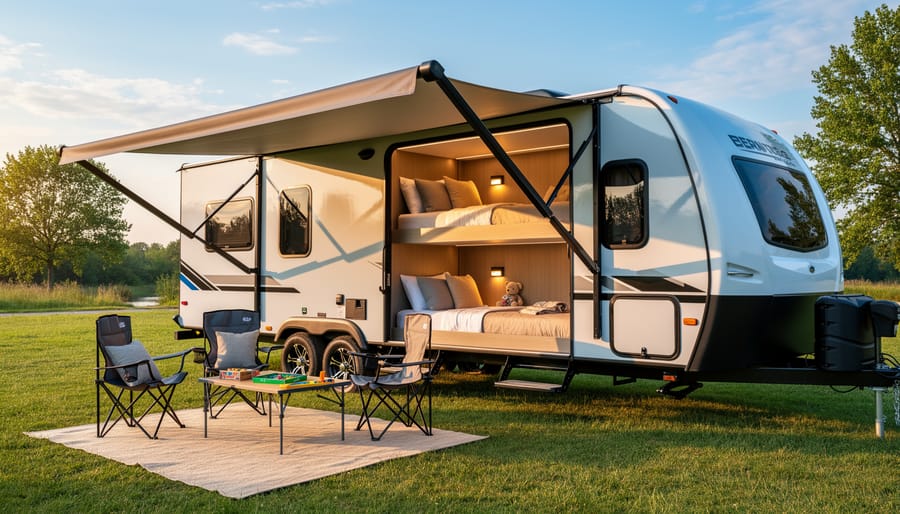
After spending months in our trailer with two energetic kids, I learned that the right features can mean the difference between chaos and comfort. Some things you think you need turn out to be extras, while features you barely noticed on the lot become lifesavers on the road.
- Bunk Room or Dedicated Sleeping Space for Kids
- Gives children their own area to wind down and sleep while parents enjoy quiet time. The privacy helps everyone maintain sanity during long stretches of travel.
- Convertible Dinette and Couch
- Provides flexible space that transforms from daytime living area to extra sleeping spots. Essential for accommodating guests or creating separate zones when everyone needs their own corner.
- Enclosed Underbelly
- Protects plumbing and tanks from freezing temperatures and road debris. Makes four-season travel possible and prevents costly repairs from exposure damage.
- Outdoor Kitchen or Pass-Through Storage
- Keeps cooking smells and heat outside during warm weather while freeing up indoor space. Double-duty storage areas let you haul bikes, camping gear, and beach equipment without cluttering the living area.
- Large Fresh Water Tank (50+ gallons)
- Extends your boondocking capabilities and reduces refill stops with active kids who use water constantly. The independence means you can camp where the adventure takes you, not just where hookups exist.
Storage becomes critical when you’re packing for multiple kids across different seasons. Look for trailers with deep cabinets, under-bed storage, and exterior compartments that actually fit camping chairs and sports equipment. We discovered that vertical storage beats sprawling cubbies because floor space vanishes fast when you add car seats, strollers, and the inevitable collection of rocks and sticks kids gather.
The bathroom layout deserves serious attention. A separate toilet and shower area prevents morning bottlenecks when everyone needs to get ready. We’ve appreciated having a tub for bathing toddlers and washing sandy feet after beach days. Some families swear by dual entry bathrooms that open to both the bedroom and main living space.
Kitchen functionality matters more than size. A three-burner stove gives you room to prepare easy camping meals without juggling pots. A decent-sized refrigerator (8+ cubic feet) handles fresh produce and leftovers for a family of four. Counter space for meal prep becomes precious real estate, especially when you’re tackling family camping recipes with little helpers underfoot.
Climate control can make or break your experience. A ducted heating and cooling system distributes air evenly throughout the trailer instead of creating hot and cold zones. We learned this the hard way during a summer trip when the kids’ bunk room turned into a sauna while we froze up front.
Safety features shouldn’t be afterthoughts. Carbon monoxide and propane detectors are non-negotiable. Rounded corners on furniture edges save countless bumped heads. Childproof locks on exterior doors and cabinet latches on chemical storage give you peace of mind.
Budget-Friendly Picks That Don’t Sacrifice Quality
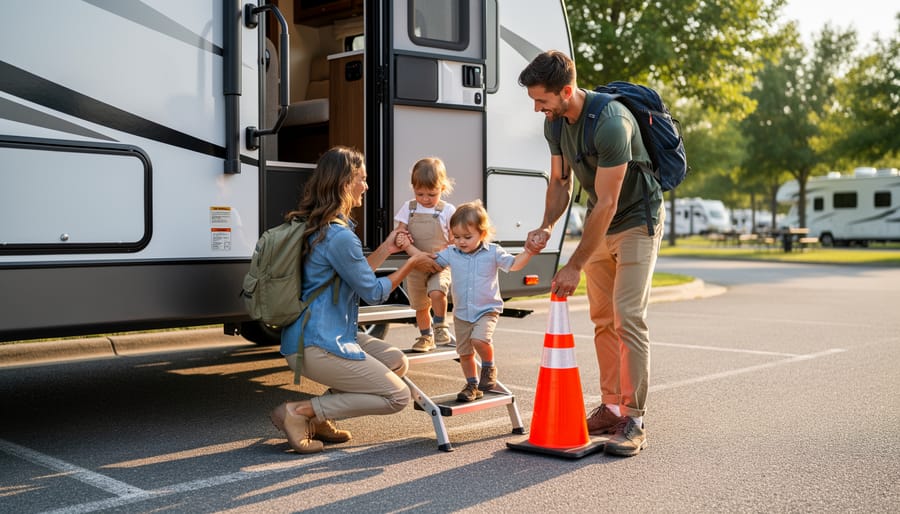
Finding a quality family-friendly travel trailer doesn’t mean draining your savings account. We’ve met countless families on the road who scored amazing deals by knowing what to look for and where smart compromises won’t haunt you later.
Start by setting a realistic budget that includes the trailer itself plus about 15% for immediate upgrades or repairs. A $20,000 trailer often becomes a $23,000 investment once you add essentials like a weight distribution hitch, basic maintenance items, or that mattress upgrade you’ll desperately need.
The used market offers incredible value if you know what you’re doing. Trailers depreciate fast, losing about 20% the moment they leave the dealer lot. A three-year-old model in good condition can save you thousands while offering essentially the same experience as new. Focus on models known for reliability and avoid brands with widespread quality issues, even if the sticker price seems tempting.
When shopping used, construction quality matters more than cosmetic perfection. A few scratches or dated upholstery won’t affect your family’s comfort, but a poorly sealed roof or cheaply built frame absolutely will. Check for signs of water damage around windows, slide-outs, and the underbelly. Soft floors, brown water stains, or musty smells are deal-breakers that signal expensive repairs ahead.
Some compromises make perfect sense. Standard instead of luxury finishes? No problem. Skip the outdoor kitchen or fireplace if it keeps you in budget. These extras sound nice but won’t make or break your family’s experience. However, never compromise on solid construction, adequate sleeping space for your crew, or a functional bathroom. Those fundamentals affect daily life on every single trip.
Consider floor models or previous-year inventory at dealerships. We bought our trailer in November when dealers wanted to clear space for new models and negotiated a fantastic price. End-of-season timing gave us leverage that saved several thousand dollars.
Off-brand or lesser-known manufacturers sometimes offer better value than big names. Research specific models through owner forums and Facebook groups where real families share honest experiences. You’ll quickly learn which budget-friendly options hold up to family life and which ones spend more time in the shop than on the road.
Real Family Stories: Life in Our Travel Trailer
When the Martinez family traded their 2,400-square-foot suburban home for a 28-foot travel trailer, their friends thought they’d lost their minds. Three kids under ten in a space smaller than most living rooms? But six months into full-time RV living Maria tells me something unexpected: “We actually see each other now. Really see each other, not just pass in hallways.”
That’s the paradox of trailer life with kids. Yes, you’re constantly tripping over someone’s shoes or negotiating bathroom time. But you’re also present in ways that felt impossible before. The Thompson family discovered this when their twin seven-year-olds started helping with dinner prep not because they had to, but because there was literally nowhere else to be. “We became a team,” Sarah Thompson explains. “In our old house, everyone scattered to their rooms. Here, we cook together, plan routes together, fix things together.”
The best part isn’t the destinations, it’s watching our kids become confident, adaptable humans who can set up camp in the rain and navigate a new town without fear.
Of course, the Instagram-perfect moments come with reality checks. The Johnsons laugh now about their first attempt at homeschooling in the trailer during a Texas heat wave when the air conditioner quit. “We ended up at a library for three days straight,” Katie admits. “I’d envisioned lessons at picnic tables with mountain views. Instead, we learned that flexibility matters more than the plan.”
Storage becomes an obsession. Every family mentions the constant purging, the creative solutions for toys and school supplies, the realization that kids don’t actually need eighteen stuffed animals. The Chen family instituted a one-in-one-out rule after their first month, and their nine-year-old daughter became ruthless about editing her possessions.
The hardest parts? Missing extended family, especially grandparents. Dealing with illnesses in tight quarters. Finding your rhythm in a space where privacy means putting on headphones or taking a walk. But ask any of these families if they’d go back, and the answer comes quick. They’ve traded square footage for experiences, and somehow their kids seem bigger for it, more capable, more curious, more connected to both nature and each other than they ever were before.
Making It Work: Setting Up Your Family Space
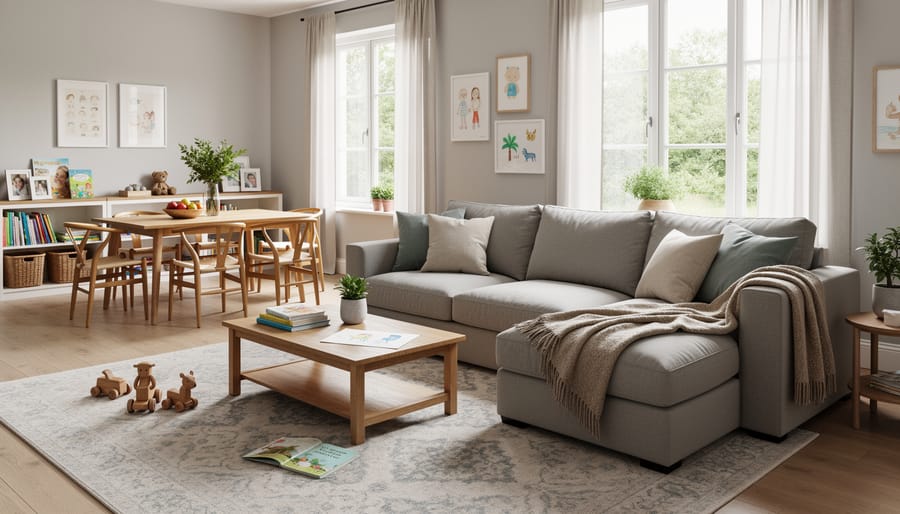
The first week in our trailer felt like living in a closet with my kids. Toys everywhere, clothes spilling out of cabinets, and me wondering if I’d made a terrible mistake. Then we got intentional about our space, and everything changed.
Start by assigning zones, even tiny ones. We use color-coded baskets under the dinette for each kid’s current toys, clothes they wear constantly go in hanging shoe organizers on cabinet doors, and bedtime books live in mesh bags hooked to bunk rails. The rule is simple: one zone per activity. School stuff stays at the dinette, art supplies in the outdoor storage, and dress-up clothes rotate in and out of a single bin. When everything has a spot, cleanup takes minutes instead of hours.
Vertical space is your secret weapon. Stick command hooks inside cabinet doors for headphones, backpacks, and jackets. Magnetic strips on the wall hold toy cars and metal puzzles. Tension rods across cabinets create instant dividers for cutting boards, baking sheets, and art paper. We mounted a folding desk to the wall that drops down for homework and folds up for dinner. Every inch counts when you’re this cozy.
Personalization makes it home. Let your kids choose their bunk decorations, hang family photos with removable adhesive, and bring favorite blankets or stuffed animals. We have a small corkboard where the kids pin postcards from places we visit. It gives them ownership of the space and helps when they’re missing their old house.
The clutter battle never ends, but weekly purges help. Every Sunday, we do a ten-minute sweep where anything broken, outgrown, or unloved goes in the donation bag. We also use the one-in-one-out rule religiously. New toy from a gift shop? Something else leaves. It sounds strict, but it’s saved our sanity and taught the kids to be thoughtful about what they keep.
Before you plan a national parks trip get your systems solid at home. Download road trip apps that help you find campgrounds with the space and amenities you need. When your trailer feels organized and functional, you’ll spend less time managing chaos and more time making memories.
Before You Buy: Questions to Ask and Red Flags to Watch
Walking into a dealership or meeting a private seller can feel overwhelming when you’re trying to evaluate a potential home on wheels for your family. I’ve seen too many families get caught up in the excitement of cute décor or a persuasive sales pitch, only to discover costly problems later.
Start by asking the seller about the trailer’s history. How many owners has it had? Has it been lived in full-time or used for occasional weekends? Any water damage or repairs? If they hesitate or dodge these questions, that’s your first red flag. For used trailers, always request maintenance records, a well-cared-for RV will have documentation.
Next, confirm the actual weight specifications. Ask for the dry weight, cargo capacity, and GVWR (gross vehicle weight rating). Compare these against your tow vehicle’s capacity with your family and gear loaded in. Many families learn too late that their “perfect” trailer exceeds what they can safely tow.
When you’re ready to inspect the trailer, bring your whole family and follow this walkthrough:
- Check the roof for soft spots, cracks, or pooling water that signals leaks
- Inspect all seals around windows, doors, and slide-outs for gaps or deterioration
- Open every cabinet and check corners for water stains or musty smells
- Test all appliances, outlets, lights, and the water system while connected to power and water
- Examine the underbelly for rust, damage, or signs of rodent activity
- Check tire condition and age, tires older than five years need replacement regardless of tread
During your test, have the kids climb into their potential sleeping areas. Can they sit up? Is there enough ventilation? Run the AC and heating while you’re there, you need to know these systems work before you’re camping in 95-degree heat with cranky children.
Watch for sellers who rush you or discourage thorough inspection. A quality trailer and honest seller will welcome your diligence. If something feels off, trust your gut and keep looking.
Choosing the right family-friendly travel trailer isn’t about finding perfection. It’s about discovering what works for your unique crew and the adventures you’re dreaming up together. Maybe that’s a compact trailer that lets you explore remote corners of national parks, or perhaps it’s a spacious bunkhouse model where everyone has their own retreat after long days of hiking and swimming.
We’ve covered a lot of ground here, from sleeping configurations to storage hacks, but here’s what really matters: your family will adapt and make any space feel like home. The memories you’ll create around campfires, in new cities, and during those spontaneous detours will far outweigh any compromises you make on floor plans or cabinet finishes.
Trust your instincts when you walk through trailers. Pay attention to how your kids react, where they naturally gravitate, and whether you can picture rainy afternoons or early mornings in that space. The right trailer will feel like possibility rather than limitation.
Your perfect home on wheels is out there. It might take a few dealership visits or private seller meetings to find it, but when you do, you’ll know. And then? The real adventure begins. Safe travels, and may your family’s journey be filled with wonder, laughter, and just enough chaos to keep things interesting.