
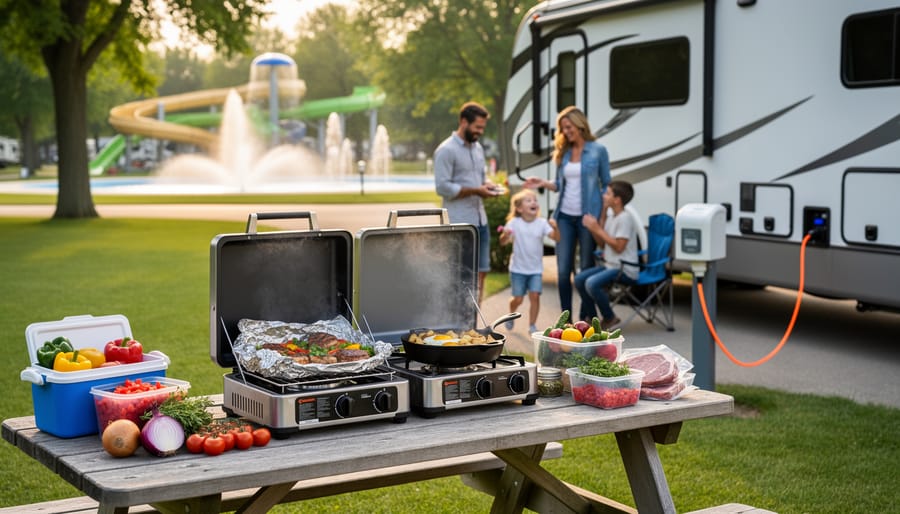
Cooking at Bingemans camping requires just a few essentials: a portable stove or grill, basic cookware, and a solid meal plan that takes advantage of the park’s amenities while respecting their open-fire regulations. Most campers can prepare satisfying family meals in 20-30 minutes per dish with minimal prep work, making it perfect for families who want more time exploring Waterloo Region and less time stressing over dinner.
We discovered this firsthand during our week-long stay at Bingemans last summer. Our kids wanted to spend every waking moment at the water park and adventure activities, which meant we needed camping meals that were quick, delicious, and didn’t require constant supervision. The key turned out to be understanding what cooking methods work best in a campground setting and planning our menu around ingredients that travel well and cook fast.
Bingemans offers electric hookups at many sites, giving you more flexibility than backcountry camping. You can bring small appliances, use coolers more effectively, and even prep ingredients ahead without worrying about food safety quite as much. But that doesn’t mean you should overpack or try to recreate your full home kitchen setup.
The real magic happens when you combine smart preparation with recipes designed for outdoor cooking. Whether you’re grilling breakfast scrambles over propane, assembling no-cook lunches between water slides, or creating foil-packet dinners that practically cook themselves, the right approach transforms camping meals from a chore into part of the adventure. This guide walks you through everything you need to know, from essential gear and safety considerations to step-by-step meal planning and family-tested recipes that actually work at Bingemans.
What You’ll Need for Cooking at Bingemans
Getting your kitchen setup right before heading to Bingemans makes the difference between stressed meal times and relaxed family cooking. Since Bingemans offers full electrical hookups at most sites, you can bring more equipment than you’d pack for primitive camping, but you’ll still want to keep things compact and multipurpose.
For your RV kitchen, bring a basic cookware set that includes one large pot, a medium saucepan, and a cast-iron skillet that works on both stovetops and over fire. Pack nesting bowls to save space, along with a cutting board, sharp knife, spatula, tongs, and a can opener. Don’t forget pot holders and dish towels. A collapsible dish tub and biodegradable soap make cleanup easier at Bingemans’ water stations.
Here’s what you’ll need organized by cooking method:
- RV Kitchen: Cookware set with lids, mixing bowls, utensils, measuring cups, baking sheets if your RV has an oven, and coffee maker or kettle
- Campfire Cooking: Long-handled roasting sticks, heavy-duty aluminum foil, cast-iron Dutch oven, fire-resistant gloves, and a small grill grate that fits over fire rings
- Portable Grill: Propane or charcoal grill (check Bingemans’ current rules), fuel supply, grill brush, and meat thermometer
- Food Storage: Cooler with ice packs, airtight containers, zip-top bags in various sizes, and a separate cooler for drinks to minimize opening your food cooler
Bingemans has picnic tables at each site, but bringing a tablecloth with clips helps on windy days. Pack paper plates and cups for quick meals, but have reusable dishes for sit-down dinners. A headlamp keeps your hands free for evening cooking, and matches or a long lighter stored in a waterproof container prevent frustration when starting fires.
Understanding Bingemans’ Camping Facilities and Kitchen Setup
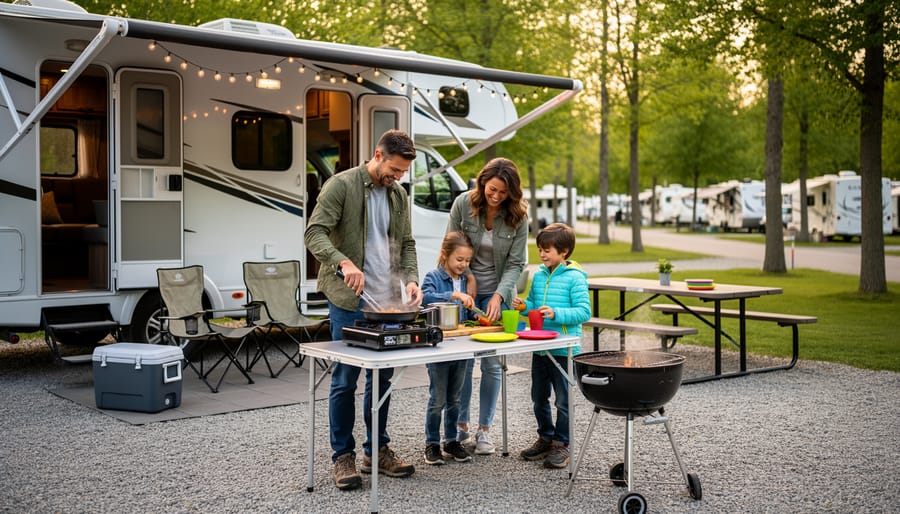
Bingemans offers a range of camping sites with different amenities that directly impact how you’ll cook during your stay. The park features both full-service and partial-hookup sites, with most providing 30 or 50-amp electrical service that easily powers RV appliances like microwaves, electric griddles, and air fryers. Water hookups are available at full-service sites, making cleanup and meal prep significantly easier than hauling water from central stations.
Each campsite comes equipped with a picnic table and fire pit, which become your outdoor kitchen and dining room. The fire pits are standard ground-level rings suitable for campfire cooking with grates or tripods (you’ll need to bring your own grate if you plan to cook directly over the flames). The picnic tables provide essential prep space when your RV counter gets crowded, and they’re perfect for family-style meals under the trees.
One major advantage is the park’s proximity to local grocery stores and restaurants in Kitchener-Waterloo, just minutes away if you forget ingredients or need a meal-prep break. The campground also has modern restroom facilities with hot showers, which doubles as a backup dishwashing station when your RV tanks are full. Understanding these available resources helps you pack smarter and cook more efficiently throughout your stay.
Safety Tips for Cooking at Bingemans
Cooking outdoors carries risks that kitchens at home don’t, so a few precautions will keep everyone safe. Bingemans enforces fire safety rules year-round: campfires must stay in designated fire pits, never left unattended, and completely extinguished before you leave the site or go to sleep. During dry conditions, the park may issue fire bans that prohibit open flames entirely, so check current restrictions when you arrive.
Propane safety matters just as much in your RV. Check all hose connections for leaks before each trip by brushing soapy water over the fittings and watching for bubbles. Turn off propane tanks when you’re not cooking, and ensure your RV has a working propane detector. Store spare tanks outside, secured upright, never inside the living space.
Food handling takes extra vigilance in warm weather. Cook meats to their safe minimum internal temperatures (165°F for poultry, 145°F for whole cuts of beef and pork), and use a quick-read thermometer rather than guessing. Keep perishables in coolers with ice, opened as infrequently as possible, and toss anything that’s been sitting out for more than two hours in heat.
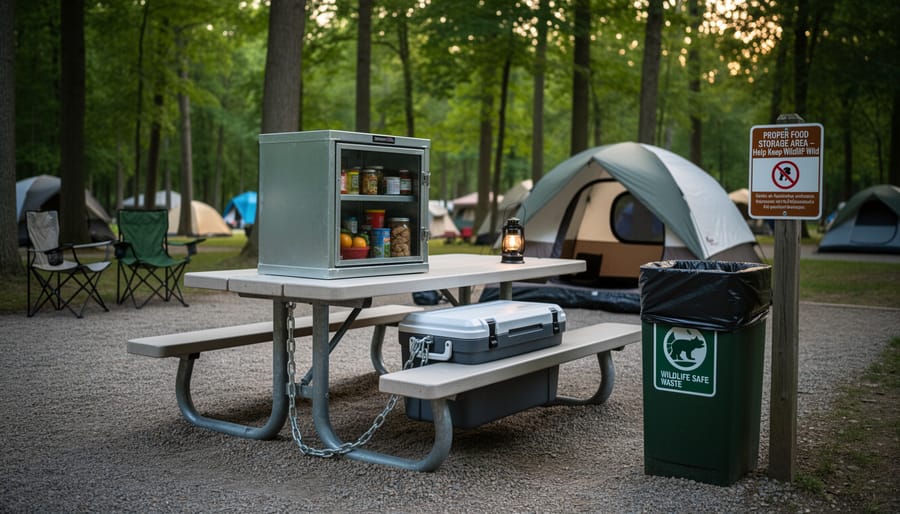
Though Bingemans isn’t deep wilderness, storing food safely still applies: lock groceries inside your RV or vehicle overnight, clean up cooking scraps immediately, and bag trash in sealed containers. Raccoons and other scavengers will raid unsecured coolers, creating a mess and a health hazard.
Step-by-Step: Planning and Preparing Meals at Bingemans
Start your meal planning two weeks before you arrive at Bingemans. Browse through your family’s favorite recipes and choose meals that store well, reheat easily, and don’t require exotic ingredients. Think about the days you’ll be there, are you planning full days at the waterpark or quiet evenings by the fire? Match your meal complexity to your activity level.
Here’s the workflow that works best for families camping at Bingemans:
- Create a day-by-day meal schedule listing every breakfast, lunch, dinner, and snack you’ll need. Account for one eating-out meal if you want to try local restaurants in Kitchener.
- Write your grocery list organized by store sections (produce, dairy, meat, pantry) and note which items can be prepped at home versus fresh items to buy locally.
- Prep ingredients three days before departure. Chop vegetables, marinate meats, pre-measure spices into small containers, and freeze items like chili or spaghetti sauce in reusable containers.
- Pack your RV fridge strategically with heavy items on bottom shelves, keeping first-night dinner ingredients accessible at the front. Use clear bins to group meals together.
- Set up your RV kitchen immediately upon arrival at Bingemans. Designate zones for cooking, prep, and cleanup. Place your most-used utensils in an easy-reach drawer or container.
- Cook during off-peak times when possible, early mornings or late afternoons, to avoid the midday heat in summer and to keep your RV cooler.
- Clean as you go. Wash dishes immediately after meals, wipe counters, and store leftovers properly to maximize limited RV space and prevent odors.
The key is treating meal prep like you plan your RV road trip with intention but flexibility. Keep backup options like pasta or grilled cheese ingredients on hand for days when plans change or kids are too tired for elaborate meals after hours at the splash pad.
Family-Friendly Recipes Perfect for Bingemans Camping
Easy RV Stovetop and Oven Meals
These recipes work perfectly in your RV kitchen at Bingemans and scale easily for families while keeping cleanup simple.
One-Pot Pasta Primavera: In a large pot, combine 1 pound pasta, 4 cups vegetable broth, 2 cups mixed frozen vegetables, 2 minced garlic cloves, and Italian seasoning. Bring to a boil, then simmer 10-12 minutes until pasta is tender. Stir in 1 cup shredded parmesan and a splash of cream if desired. The pasta absorbs the broth while cooking, creating its own sauce.
Sheet Pan Sausage and Veggies: Cut 1 pound smoked sausage into coins and toss with chopped bell peppers, onions, and baby potatoes on a rimmed baking sheet. Drizzle with olive oil, season with garlic powder and paprika, then bake at 400°F for 25 minutes. Everything cooks on one pan, and the sausage is already cooked so you’re just heating and roasting.
Breakfast Skillet Hash: Dice leftover cooked potatoes (or use refrigerated diced potatoes) and cook in a large skillet with olive oil until crispy, about 8 minutes. Add diced ham or bacon, frozen corn, and bell peppers. Cook 5 more minutes, create wells, crack in eggs, cover and cook until eggs set. These easy camping meals require just one cooking vessel each and use ingredients that travel well in your RV fridge.
Classic Campfire Cooking Recipes
Hobo Foil Packet Dinner
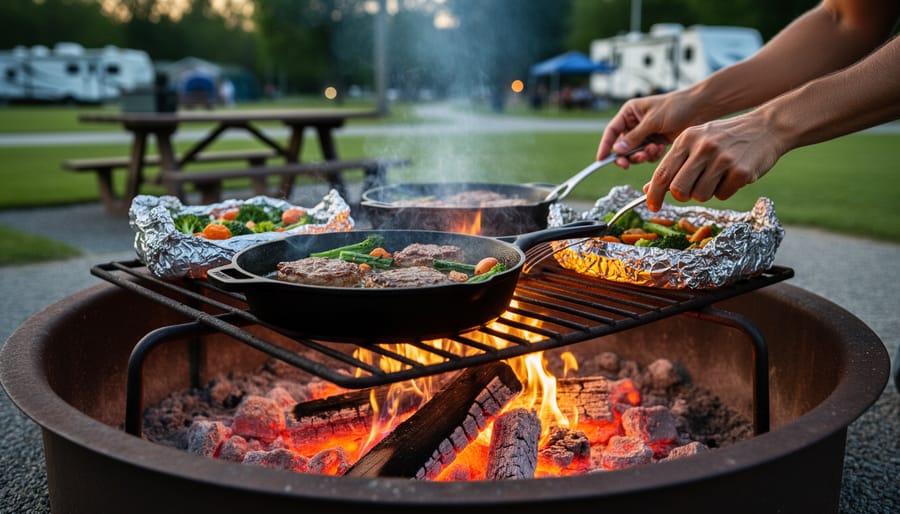
Layer 4 oz ground beef (formed into a patty), sliced potatoes, carrots, and onions on heavy-duty foil. Season with salt, pepper, and a pat of butter. Seal tightly with double folds. Place directly on hot coals for 25-30 minutes, flipping halfway through. The packet’s done when potatoes pierce easily with a fork through the foil.
Skillet Campfire Nachos
Spread tortilla chips in a cast-iron skillet, top with pre-cooked taco meat, black beans, and shredded cheese. Cover with foil and place on a grate over medium flames (you should be able to hold your hand 6 inches above for 5-6 seconds). Heat for 8-10 minutes until cheese melts completely. Top with salsa and sour cream.
Campfire Breakfast Hash
Dice 3 potatoes, 1 bell pepper, and 4 sausage links. Heat 2 tablespoons oil in a cast-iron skillet over established coals. Add potatoes first, cooking 10 minutes while stirring occasionally. Add peppers and sausage, cook another 8 minutes. Create wells and crack 4 eggs into them. Cover and cook 5 minutes until eggs set. This feeds a family of four and tastes incredible after a morning at Bingemans’ splash pad.
No-Cook and Quick Snack Ideas
When you’re racing out the door to catch Bingemans’ waterpark opening or the kids wake up starving before you’ve had coffee, these no-cook options save the day. Pack a cooler with pre-washed fruit, individual yogurt cups, granola, and cheese sticks for instant breakfasts. Overnight oats made the night before in mason jars combine rolled oats, milk, and toppings like berries or peanut butter, just grab and eat cold. Trail mix, hummus with pre-cut veggies, and ready-made sandwiches travel well for midday snacks between attractions.
Keep a snack bin in your RV stocked with crackers, protein bars, dried fruit, and nut butter packets. Bagels with cream cheese require zero cooking and fuel active families. For more inspiration beyond these basics, check out our other tasty camping recipes that work perfectly in RV kitchens. On particularly busy mornings at Bingemans, we’ve learned that having grab-and-go breakfast options means nobody misses out on prime slide time because they’re waiting for pancakes.
How to Know Your Meals Are Working (and What to Adjust)
You’ll know your meals are working when everyone’s eating happily and you’re not stressed. Use a meat thermometer to verify chicken reaches 165°F and burgers hit 160°F, guessing doneness over a campfire leads to foodborne illness. If your foil packets come out soggy instead of tender, move them higher above the coals next time or reduce liquids. When recipes take twice as long as expected, your fire wasn’t hot enough; build it earlier and let coals develop fully.
Adjust portions based on how active your family is at Bingemans’ waterpark and splash pads, kids burn more energy than you think. If dinners feel rushed before evening activities, prep ingredients during afternoon downtime or switch to faster one-pot meals. Rainy days? Shift campfire recipes to your RV stovetop without guilt.
Track what works in a simple camping journal. Note cook times, which meals the kids loved, and weather conditions. These RV kitchen tips accumulate into your family’s personalized camping cookbook. Next trip, try one new recipe alongside proven favorites, gradually building confidence and variety without the stress of experimenting with every meal.
Frequently Asked Questions About Cooking at Bingemans
Where’s the closest grocery store to Bingemans for last-minute supplies?
Several options sit within a 10-minute drive, including larger chains on Franklin Boulevard and smaller convenience stores even closer. Stock up before arrival if you can, but you’re not stranded if you forget something or run low mid-trip.
What if it rains all day and we can’t use the fire pit?
Your RV kitchen becomes your backup plan. All the stovetop and oven recipes work perfectly in wet weather, and you can even adapt some campfire meals by cooking them in cast iron on your RV burners instead.
Can we accommodate food allergies and dietary restrictions while camping?
Absolutely. Camping actually makes it easier to control ingredients since you’re preparing everything yourself. Bring clearly labeled containers for allergen-free items, and consider prepping some meals at home to reduce cross-contamination risk at the campsite.
How do we keep toddlers safe around cooking areas?
Set up a designated play zone away from the fire pit and cooking stations, and bring a portable playpen if your little one is especially mobile. One adult focuses on cooking while another supervises kids, tag-team it so everyone stays safe and no one misses the fun.
These questions come up constantly when families plan their first Bingemans trip, and honestly, the answers are simpler than most people expect. The campground’s layout works well for families because you have space to spread out your cooking and kid zones.
One concern that doesn’t make the FAQ list but deserves mention: what to do with leftovers. Your RV fridge handles this easily for a day or two, but in hot weather, don’t push it. We’ve learned to cook portions we’ll actually finish rather than making huge batches. If you do have extras, sharing with neighboring campers is part of the culture, we’ve made friends over a plate of extra pancakes more times than I can count.
Cooking at Bingemans isn’t just about filling hungry bellies, it’s about creating moments that stick with your family long after you’ve packed up and headed home. I’ll never forget the night our daughter insisted on flipping her own foil packet over the fire, ending up with slightly charred but triumphant campfire chicken that she talked about for months. Those imperfect, laughter-filled meals around the picnic table became the stories we retell.
The beauty of camping meals is their simplicity. No fancy presentations or complicated techniques, just good food shared under the stars while the campfire crackles. Your kids will remember the s’mores they burned and the pancakes that stuck to the pan more vividly than any restaurant meal.
So pack your cooler, fire up that camp stove, and get ready to make some delicious memories at Bingemans. The recipes might come from this guide, but the magic happens when you’re all gathered around the table together, tired from a day of adventure and grateful for a warm meal. That’s the real recipe for an unforgettable family camping trip.